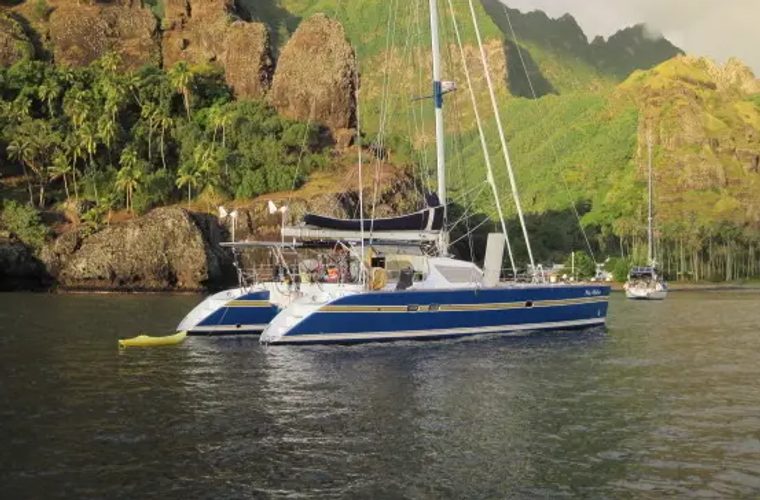
A cruise through the Marquesas: a sailor’s journal
A peaceful logbook from a passage between the high islands of the Marquesas, where the wind often fills the sails perfectly.

On this page
The logbook of a passage between the high islands of the Marquesas is rather idyllic: the wind is on the beam most of the time! As a result, the distances from the south to the north of the archipelago no longer seem so great.
Sailboats crossing the Pacific generally arrive in Nuku Hiva, the usual port of entry to French Polynesia. Since we are coming from the Tuamotu, after two or three days close-hauled we prefer to make landfall at Fatu Hiva, one of the archipelago's best-preserved islands. The approach is easy and exciting, as this great rock can be seen from a long way off. It is a change from the atolls, which appear at the last moment with the help of a wave and a line of coconut palms.
FATU HIVA
The legendary anchorage of the Bay of Virgins, a compulsory stop for every offshore sailor, is magnificent. We admire the green peaks and valleys that form a layered landscape worthy of the grandest stage.
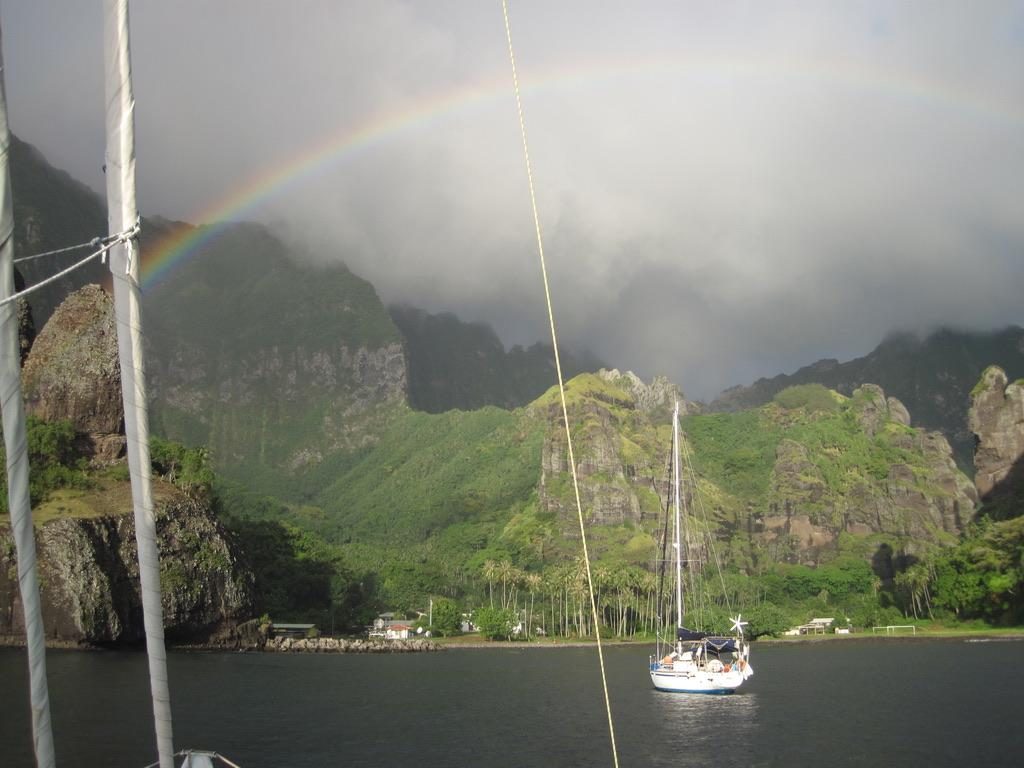
A Marquesan man with beautiful tattoos comes to welcome us by canoe. He supplies us with grapefruits, limes and mangoes, each one more delicious than the last.
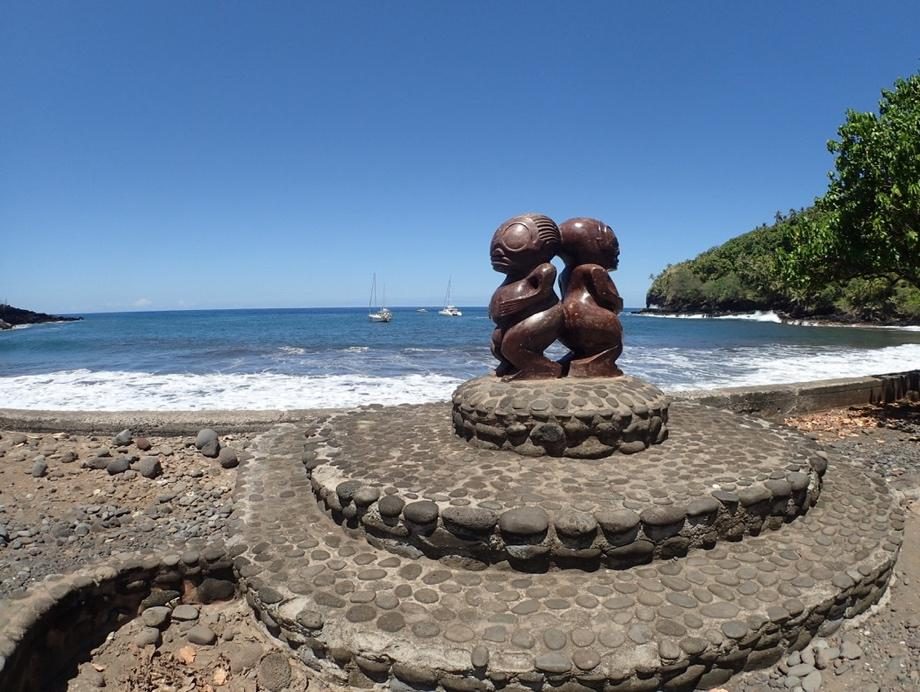
After a good night's rest, the crew is in top form to explore the valley. The goats we spot on the cliffs set us an example. Yesterday, we checked our anchor carefully because the thermal wind can quickly build here. A tiki greets us at the entrance to the flower-filled village, where a small quay allows us to come ashore.
The lovely climb towards the heights lets us admire the plunging view and the many scents of the vegetation. It is hot! We fill our bottles at the little spring beside the road.
After scouting the area, we decide to set off on a full-day hike. The concrete and dirt road takes us to the main village, Omoa. This time we have brought enough water. One spectacular viewpoint follows another, over the sea and the mountains. The descent towards Omoa delights our taste buds: the mango trees are overflowing with fruit.
Craftsmanship is at the heart of Marquesan life, especially here, where isolation preserves authenticity. In the village, we admire tikis carved in stone or bone, as well as tapa cloths and fragrant bouquets. Each object has a particular meaning.
After this direct immersion in Marquesan culture, a beautiful passage, lit by a full moon as bright as day, takes us to Hiva Oa. Our timing is no longer as critical as in the Tuamotu, where tide times govern sailing. Even so, we prefer to slow down and arrive at Hiva Oa at first light. As a result, our fishing line pays off and we bring up a tuna!
HIVA OA
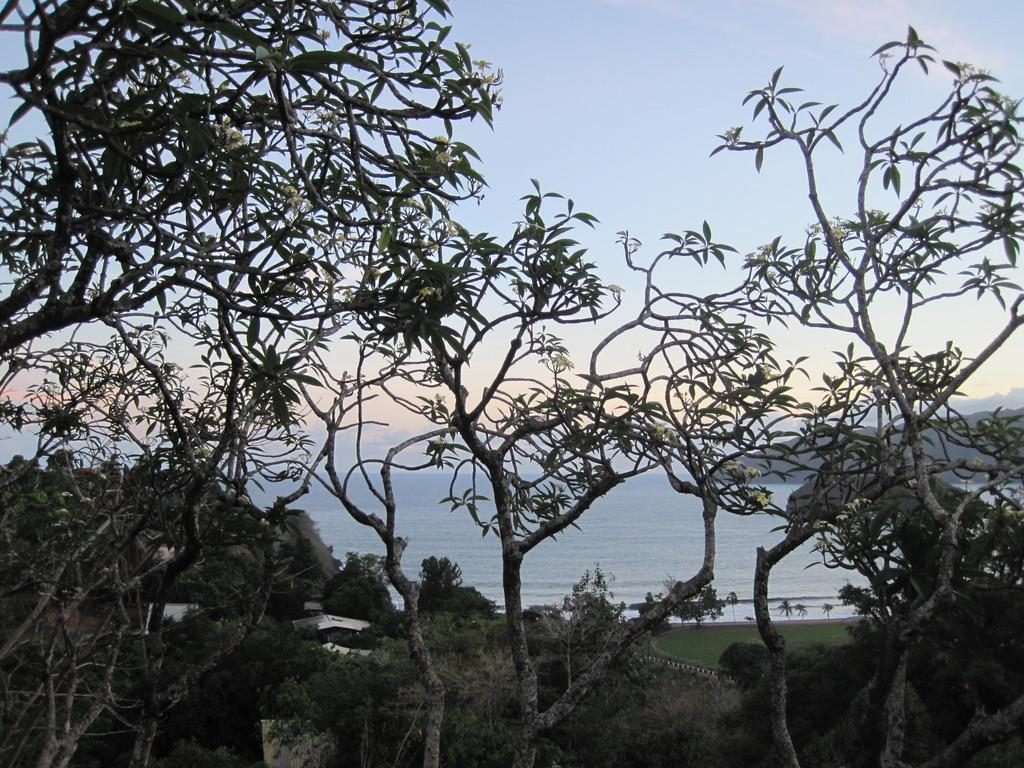
From the little port, we drive to Atuona. Then we walk up to the cemetery overlooking the town, where two illustrious artists, Gauguin and Brel, rest. Everything is white here, from the frangipani flowers to the regularly painted graves.
The next day, we leave the boat for a spectacular 4x4 tour. The winding road delivers plenty of thrills. The drop is never far away!
The Gauguin Museum and its “House of Pleasure” welcome us, offering a chance to share the painter's life in Polynesia.
A group of horses watches us from a distance. We go to see them on the black-sand beach.
The neighbouring island of Tahuata reaches out to us across the Bordelais Channel. We get there quickly after an extraordinary passage: a pod of pilot whales accompanies us for almost the entire crossing.
TAHUATA
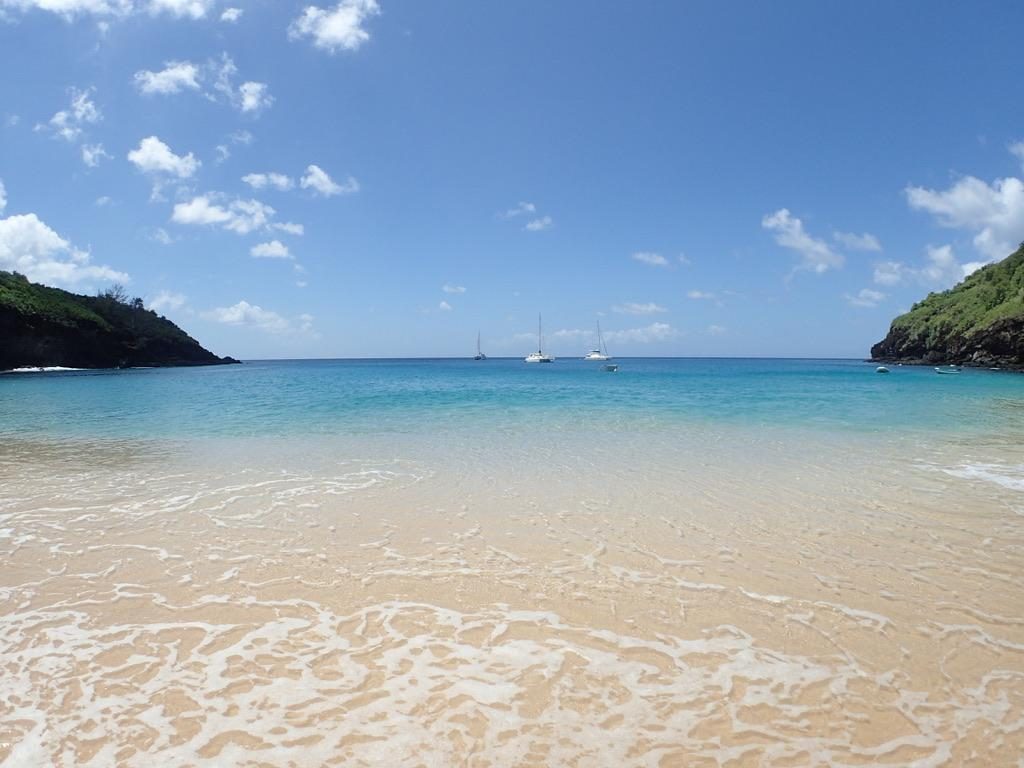
Before the magnificent white-sand beach in the sheltered bay of Hanamoenoa, we rediscover the joys of clear water.
Our curiosity takes us up the hill overlooking the neighbouring bay. Surprise! A herd of wild horses watches us nonchalantly.
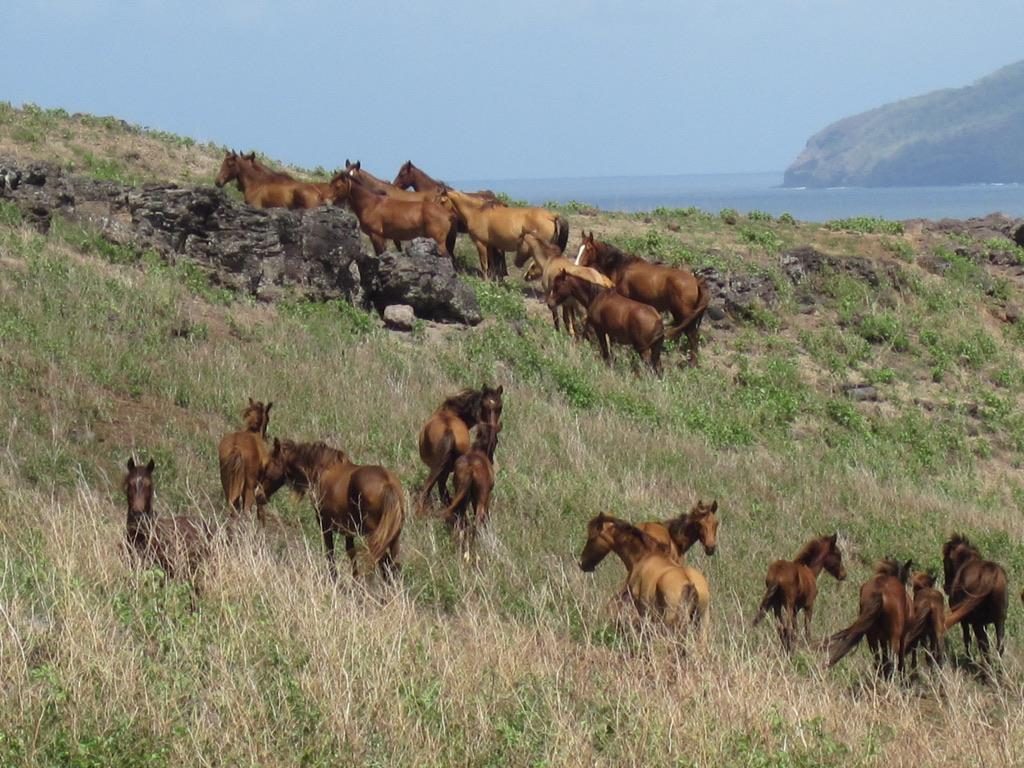
Free-roaming horses
We help some Marquesans bring their lemon harvest to their boat, anchored a little farther away. The waves nearly overturn our dinghy! The dexterity of our companions saves the day.
Another lovely passage brings us to Ua Pou.
UA POU
The bay is welcoming and we are sheltered behind the large jetty. The inhabitants enjoy telling us about their island.
Flower stone is a beautiful emblem of the island, and we find it throughout our walks. Here, as on the other islands of the archipelago, craftsmanship is part of everyday life.
It is time to sail towards Nuku Hiva, where the Arts Festival is being prepared. A fast, comfortable passage takes us to this large island with spectacular terrain.
NUKU HIVA
The great Bay of Taiohae borders the small town of the same name. We are struck by its size, both width and length, and by the number of anchorages it offers.
A walk along the waterfront is a must! We find fruit, vegetables and many other provisions to restock.
The cathedral is magnificent; its works show the skill and artistic sense of the Marquesans. We will also return for Mass to hear the singing!
The Arts Festival is the high point of our encounter with the Marquesan people. Each delegation presents its dances and dancers, its works and its traditional dishes.
We are filled by the powerful sound and rhythm of the enormous drums.
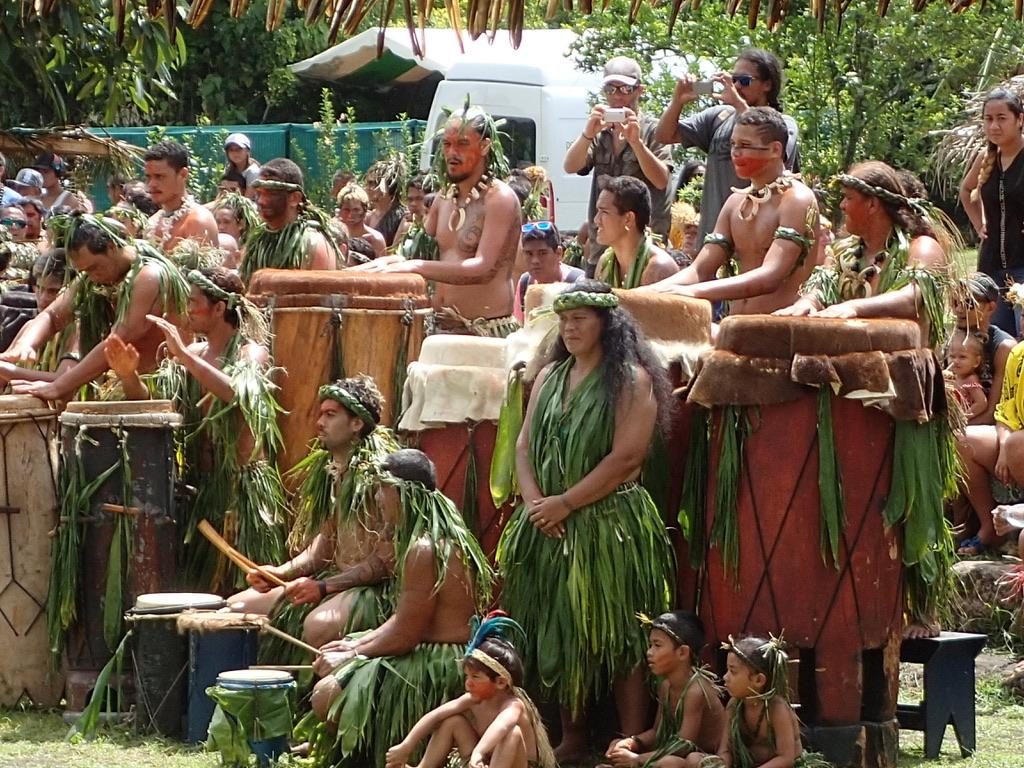
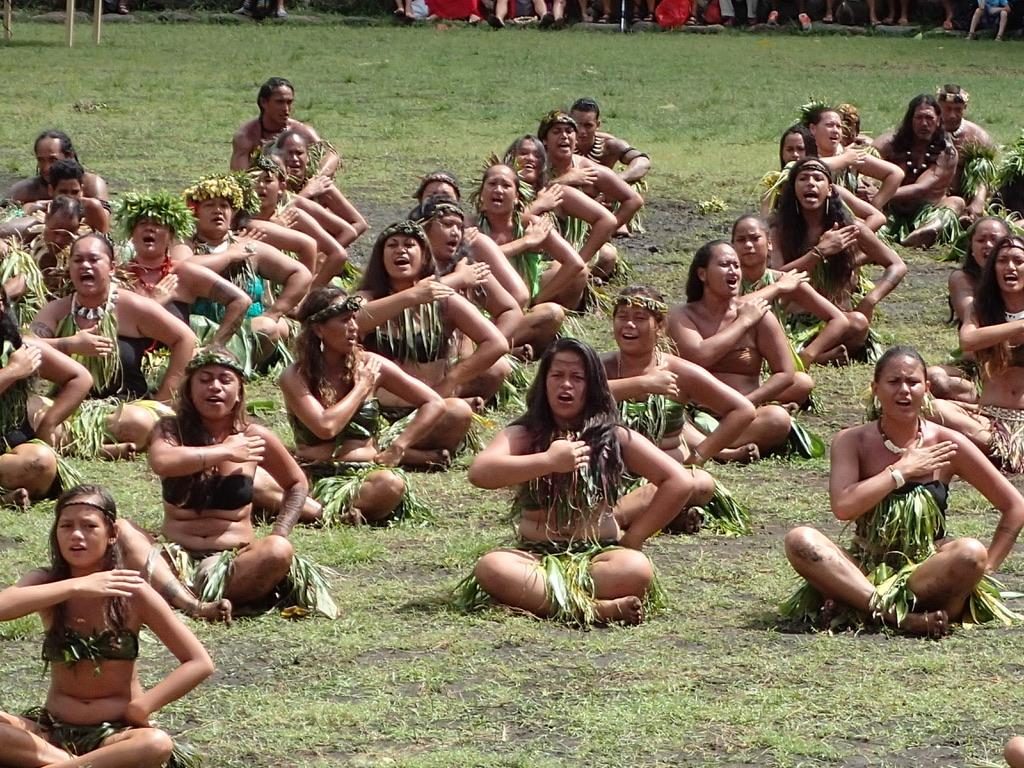
The groups are impressive in size, with more than 200 dancers at times! The choreography combines fast movements, seated dances and warrior chants.
Costumes, jewellery, tattoos and body paint impress us just as much. What work, what skill! Here, the words Marquesan culture rhyme with ancestral and alive!
Here in particular, we feel the “mana”. The power of nature and its people pierces us.
Before leaving, we enjoy the ballet of manta rays. They love these plankton-rich waters. We lose track of time watching their elegance and wingspan.
This spectacle makes us want to snorkel at the mouth of the bay. It stays in our memories: after a manta ray, we cross paths with a hammerhead shark. It is elusive, and that suits us just fine…
We have now been sailing between the islands for several weeks, and there is still so much to discover. We will return to the Land of Men (Enata Fenua in Marquesan).
Also worth discovering